Homeowners, buyers, and contractors often ask what does asbestos look like in drywall when planning renovations or repairs. The honest answer is that asbestos drywall usually looks almost identical to non asbestos drywall, which is why understanding context, risk factors, and safe next steps matters more than relying on appearance alone. Working with experienced environmental testing professionals can help clarify uncertainty before walls or ceilings are disturbed.
Asbestos in drywall is typically hidden within the gypsum core, joint compound, or tape that covers seams, not sitting on the surface as visible fibers. To evaluate risk, you need to look at the age of the building, past renovation history, and how the material is being handled, not just its color or texture.
Why Asbestos Was Used In Drywall
For decades, asbestos was added to many building materials because it was strong, fire resistant, and inexpensive. In drywall systems, it could show up in the board, the joint compound, or both, helping seams resist cracking and improving fire performance in walls and ceilings.
Asbestos containing drywall products became common in residential, commercial, and industrial buildings built during the mid twentieth century. Many are still in place today behind paint, paneling, or wallpaper, which means the walls you see may be older than the decorative finishes covering them.
Because asbestos was mixed into products at the factory, two sheets of drywall that look identical might have very different compositions. One may contain asbestos while another from a different batch or manufacturer does not, even though both were installed in the same room at the same time.
Can You See Asbestos In Drywall
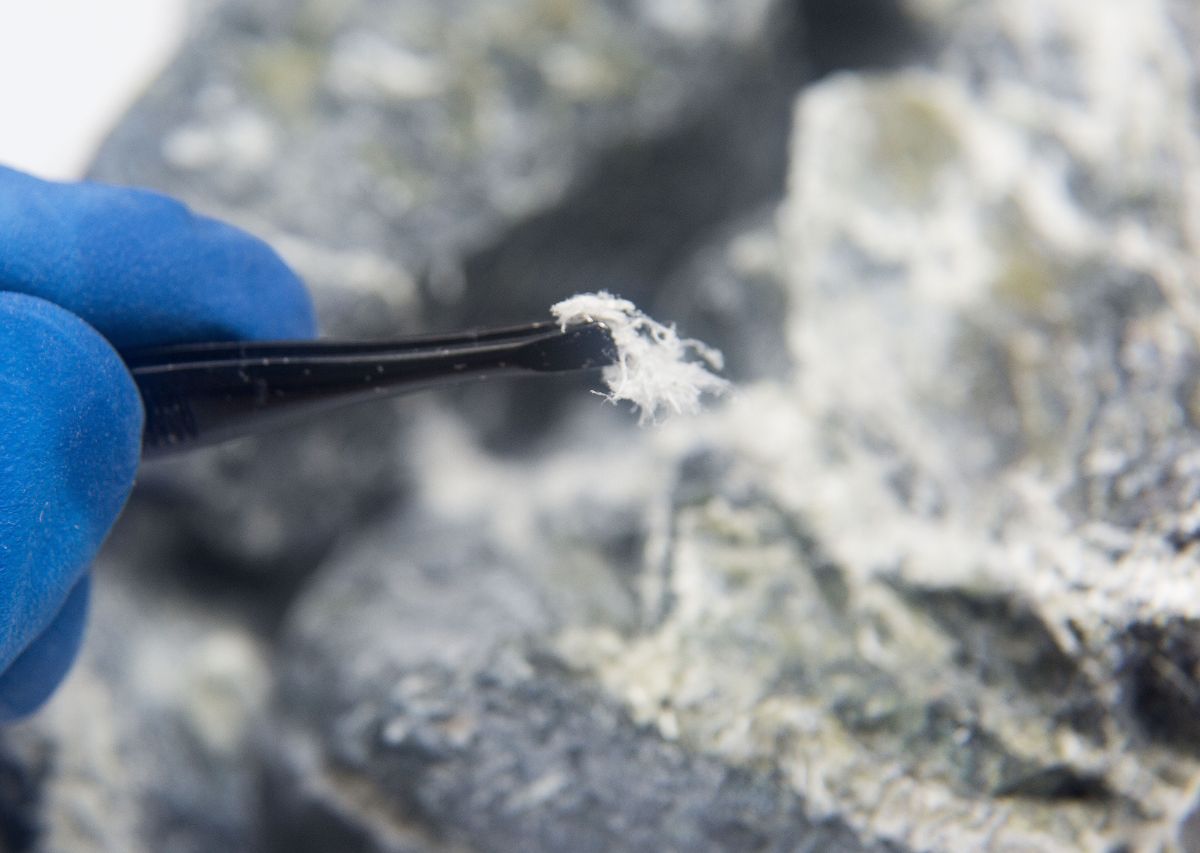
If you are trying to decide what does asbestos look like in drywall just by looking at a wall, it is important to know that asbestos fibers are microscopic. Individual fibers are far too small to see with the naked eye and are usually bound into the surrounding material.
That means asbestos drywall will usually appear as a plain, flat surface once it is finished and painted. It may be smooth or lightly textured, but any texture you see comes from joint compound or decorative coatings, not from visible asbestos fibers themselves.
Even when drywall is broken, sanded, or drilled, loose asbestos fibers are virtually impossible to distinguish from dust and debris. The only reliable way to confirm whether drywall contains asbestos is through professional asbestos testing services that involve careful sampling and laboratory analysis using specialized microscopy techniques.
Visual Clues That Raise Suspicion
While you cannot visually confirm asbestos, certain patterns can tell you when to be cautious around drywall. These clues help you identify situations where it is reasonable to pause work and consider professional evaluation instead of cutting, sanding, or demolishing the material.
Older buildings with original walls and ceilings are more likely to contain asbestos, particularly if they were built or renovated during peak usage decades. You may also notice thicker, more heavily built joint lines where older joint compound was applied, sometimes with a slightly grainy or powdery look at seams.
Common warning signs people watch for include:
- Interior walls and ceilings in buildings constructed before the early 1980s, especially if surfaces look original
- Popcorn or heavy spray textures on ceilings that may predate modern formulations
- Patches or repairs where old and new drywall or joint compounds appear to meet
Risk Factors In Homes And Buildings
The age of the structure is one of the strongest indicators when assessing possible asbestos in drywall. Properties built or renovated during the mid twentieth century are more likely to have materials that used asbestos to meet fire codes or improve durability, especially in high traffic or fire rated areas.
Location within the building can also matter. Stairwells, corridors, utility rooms, and attached garages sometimes used higher performance drywall assemblies, making asbestos containing products more likely. Fire rated walls separating different units or sections of a building may also have relied on specialized boards or compounds.
Previous renovation history adds another layer. A home might have newer drywall in some rooms and older material hidden behind cabinets, tile, or paneling in others. Even within a single wall, patches and repairs can mix eras, so one area tests positive while another nearby section does not.
How Professionals Confirm Asbestos In Drywall
Because appearance is not reliable, professionals rely on sampling and laboratory analysis to determine whether drywall contains asbestos. Trained personnel remove small pieces of drywall, joint compound, or texture from representative locations while controlling dust, then seal and label these samples for delivery to a certified lab.
In the lab, analysts prepare each sample and examine it under microscopes designed to detect asbestos fibers and distinguish them from other minerals and fillers. The lab report indicates whether asbestos is present and at what percentage, allowing owners and contractors to plan safe handling, removal, or encapsulation.
Safety Steps Before You Disturb Drywall
If you suspect asbestos in drywall, the safest first step is to stop any cutting, sanding, scraping, or demolition that might release dust. Asbestos fibers can become airborne when materials are damaged, so staying calm, pausing the work, and keeping the area as undisturbed as possible are key.
Avoid sweeping, vacuuming with regular household machines, or trying to pull material down yourself. Instead, restrict access to the space, especially for children and pets, and leave any debris in place.
When To Involve CET For Asbestos Concerns
Questions about what does asbestos look like in drywall often arise just before a project begins. CET helps replace guesswork with informed decisions by explaining testing options, interpreting results, and supporting safe planning.
If you are uncertain about the age of your walls, previous renovations, or potential hidden asbestos, you can learn more about CET’s background and approach to better understand how objective testing and clear reporting support safer renovation, real estate, and maintenance decisions.
FAQs About Asbestos In Drywall
No. Asbestos fibers are microscopic and usually hidden within the gypsum core or joint compound, so finished walls look similar whether or not asbestos is present. Only properly collected samples analyzed in a qualified laboratory can confirm if a particular drywall or texture contains asbestos.
Asbestos use in drywall systems peaked during the mid twentieth century, especially in buildings constructed or renovated before modern regulations restricted its use. If your property dates from that era and still has original walls or ceilings, it is wise to treat them cautiously until testing clarifies what materials were installed.
Not all joint compound contains asbestos, but many older formulations did, particularly those used for taping seams and creating smooth surfaces. Because installers sometimes mixed different products on the same job, one seam can test positive while another nearby seam does not, which is why multiple samples are often recommended.
Even small tasks like drilling a hole can release fibers if the material contains asbestos, especially in confined spaces. A single action is unlikely to match heavy demolition exposure, but it still carries avoidable risk, so it is better to confirm material type and follow safe work practices before creating new openings.
If suspect drywall has already been cut, sanded, or broken, stop further disturbance and leave debris in place. Avoid sweeping or vacuuming with standard equipment, limit access to the area, and consult qualified professionals or testing services so you can understand whether asbestos is present and what cleanup steps are appropriate.